

7 Problems With Refacing Kitchen Cabinets in Rockwall, TX (and When Replacing Makes More Sense)
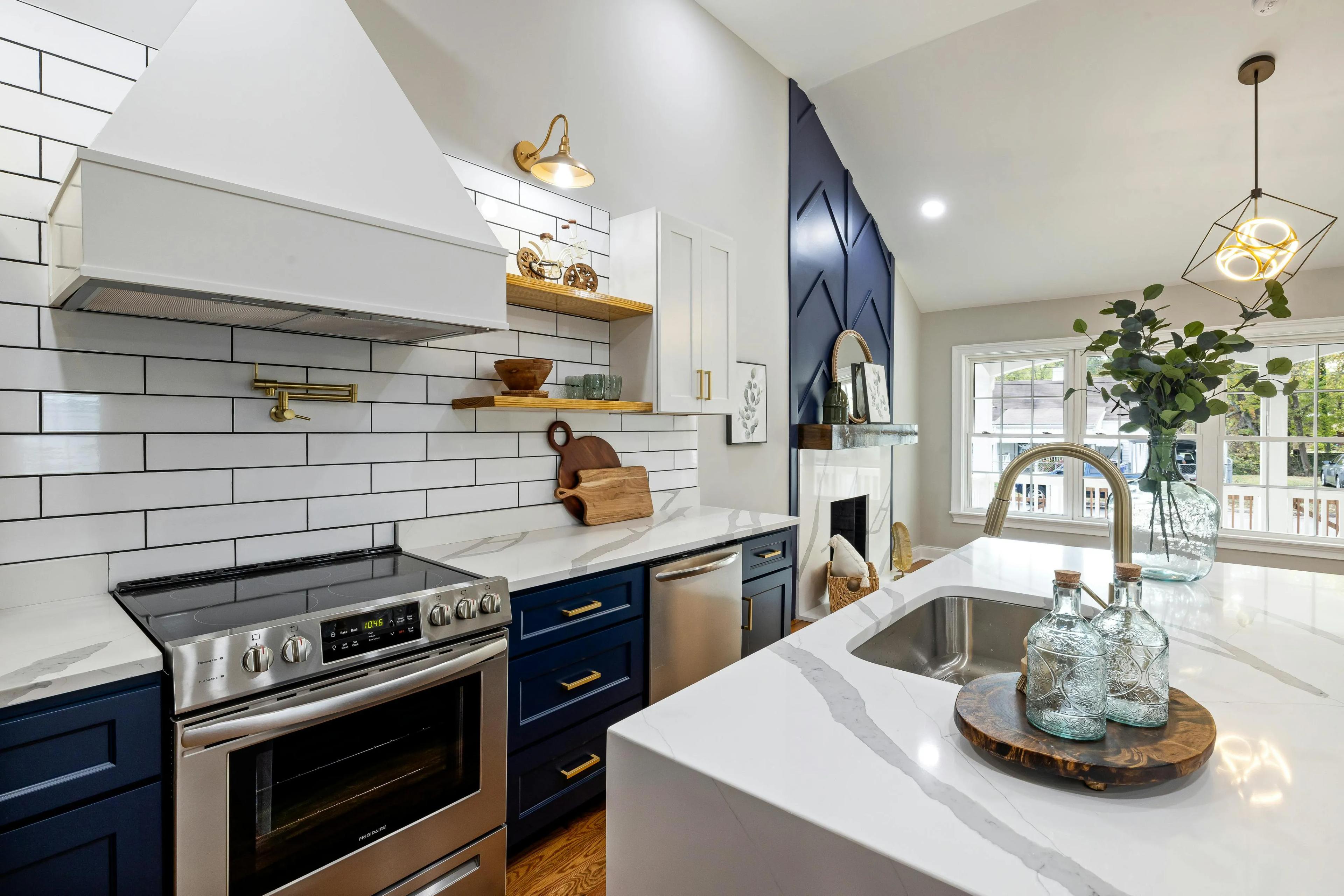
7 Problems With Refacing Kitchen Cabinets in Rockwall, TX
Cabinet refacing sounds like a smart shortcut. You keep the old boxes, swap the doors and drawer fronts, apply a fresh veneer, and save thousands compared to a full tear-out. For some kitchens, that plan works. For many others, it creates bigger headaches down the road. If you are planning a kitchen remodeling in Rockwall project, you need to understand the real problems with refacing kitchen cabinets before you commit your budget. Hidden structural damage, moisture issues inside old boxes, and non-standard sizing can turn a quick facelift into an expensive do-over. This guide walks through seven specific problems homeowners run into with cabinet refacing and helps you decide when full replacement is the better long-term investment.
Hidden Water Damage Inside the Cabinet Boxes
Refacing only changes what you see on the outside. It does nothing for the cabinet boxes behind those new doors. Water damage is one of the most common deal-breakers, and you often cannot spot it until the old fronts come off.
Slow drips from supply lines or drain connections can saturate the bottom panel of a sink cabinet for months. Particle board and MDF absorb that moisture fast. Research shows particle board can swell by more than 20 percent within 24 hours of water exposure. Once swollen, it loses bonding strength and cannot hold screws or support weight properly.
Steam from dishwashers creates a similar problem over time. Humid air rises into the cabinet above and softens adhesives holding veneers to the substrate. Gluing new veneer over damaged boxes is like painting over a cracked foundation. Before refacing, a contractor should inspect every box for soft spots, discoloration, and musty odors.
Delaminating Particle Board Cannot Hold New Surfaces
Many kitchens built from the 1980s through the early 2000s used particle board for cabinet construction. It was affordable and looked fine sealed under laminate. The problem is that particle board breaks down over time, especially in a kitchen.
In North Texas, where summer humidity regularly pushes past 60 percent, particle board swells and loses internal cohesion faster than in drier climates. The resin that binds wood particles weakens, edges crumble, and screw holes widen. When a refacing company tries to attach new doors to these surfaces, the bond fails. Doors hang unevenly, drawer slides misalign, and veneer peels within a year.
Plywood boxes handle humidity far better because cross-laminated layers resist swelling. If your cabinets are plywood and structurally sound, refacing can work. If they are particle board with edge swelling or soft spots, refacing is a risky investment.
Veneer and Laminate Peeling in High-Humidity Kitchens
Even when the cabinet boxes are in decent shape, the new veneer or laminate can fail on its own. Adhesion depends on clean surfaces, correct bonding agents, and stable indoor conditions. Texas kitchens test all three.
Cooking generates steam. Dishwashers release humid air. Ovens radiate heat. That constant cycle weakens the bond between new veneer and the old cabinet surface. The result is bubbling, warping, and peeling that starts small and spreads.
Rockwall, Rowlett, and Wylie homeowners in the 75087, 75032, and 75088 ZIP code areas deal with this more than most. Average relative humidity in the DFW metroplex stays above 60 percent for much of the year. Homes without a properly calibrated HVAC system or an externally vented range hood face even higher moisture levels around cabinets.
You Are Locked Into Your Current Kitchen Layout
Refacing keeps your existing cabinet boxes in place. Every box stays exactly where it sits now. If your layout works, that is fine. If it does not, refacing will not fix it.
Many older Rockwall homes built in the 1990s have galley-style or U-shaped kitchens with limited counter space and poor workflow. Homeowners often want to add an island, relocate the sink, or open up the floor plan. Refacing cannot accomplish any of those changes. You also cannot add cabinets in new locations, change cabinet depths, or adjust upper cabinet heights.
If your primary frustration is how your kitchen looks, refacing might solve the problem. If your frustration is how your kitchen works, a full kitchen remodel in Rockwall gives you the freedom to redesign the space from the ground up.
Soft-Close Hinges and Modern Hardware May Not Fit
Older cabinet boxes were built for the hardware standards of their era. Hinge mounting holes, drawer slide brackets, and shelf pin spacing followed dimensions that may not match current hardware.
Soft-close hinges are one of the most requested upgrades during a kitchen refresh. They require specific boring patterns in the door and a compatible mounting plate on the cabinet box. If the existing boxes use outdated hinge styles or have worn-out mounting holes, retrofitting soft-close hardware gets complicated. Some boxes need reinforcement plates. Others cannot accept modern hinges at all without modifications that weaken the frame.
Full-extension, soft-close drawer slides are another common request. These slides need specific clearances and sturdy side panels to mount correctly. Older particle board boxes with thin side panels often lack the strength to support the weight of a fully loaded pull-out drawer on modern slides.
A refacing project that also requires hardware retrofitting adds labor hours and cost that can close the gap between refacing and full replacement. According to the 2025 Cost vs. Value Report from the Journal of Light Construction, mid-range major kitchen remodels recoup about 50 percent of their cost at resale, while minor updates, including cabinet refacing, deliver stronger returns only when the existing structure supports the upgrade.
Non-Standard Cabinet Sizes Create Fitting Problems
Not every kitchen uses standard 12-inch, 15-inch, or 18-inch wide cabinet modules. Custom builders and regional cabinet shops often used non-standard dimensions that do not match today's off-the-shelf replacement doors.
When refacing with non-standard boxes, every door and drawer front must be custom ordered. That eliminates much of the cost advantage. Custom doors cost more, take longer to arrive, and leave less room for error. A door that is even 1/8 inch off creates visible gaps or rubs against adjacent doors.
In some cases, the cost of custom-fit refacing components approaches or exceeds the cost of new standard-sized cabinets installed in a reconfigured layout.
Refacing Costs Can Creep Closer to Replacement Costs
The initial quote for refacing usually looks attractive. Industry data from 2024 and 2025 shows average cabinet refacing costs between $4,000 and $15,000. Full replacement with stock or semi-custom cabinets ranges from $10,000 to $30,000.
That gap narrows fast once you add extras. New hinges, drawer slides, and pulls add several hundred dollars. Box repairs can add $500 to $2,000. Custom-sized doors for non-standard openings push material costs higher. Crown molding and end panels increase the total further.
When the final refacing bill reaches $12,000 to $15,000, new stock cabinets become a realistic option. New cabinets come with warranties, modern construction, improved storage features, and the flexibility to change your layout.
When Full Cabinet Replacement Makes More Sense
Refacing is a solid option when three conditions are true: the boxes are structurally sound, the layout works for your household, and you plan to stay in the home for fewer than seven years. Outside those conditions, full replacement delivers better value.
Consider replacement if any of these apply:
Visible water damage or mold inside any cabinet box
Particle board construction with swelling, soft edges, or crumbling
A layout that limits your cooking workflow or storage capacity
Plans to stay in the home for 10 or more years
A remodeling budget above $12,000, where the cost gap between refacing and replacing shrinks
Homeowners in Rockwall, Rowlett, Garland, Heath, and Royse City face unique demands from the Texas climate. Humidity and temperature swings accelerate the breakdown of older cabinet materials. Full replacement with plywood-box cabinets built for these conditions gives you a kitchen that performs for decades.
Frequently Asked Questions About Cabinet Refacing
Is refacing kitchen cabinets worth it?
Refacing is worth it when your cabinet boxes are structurally sound, built from plywood, and your kitchen layout already works for your household. It costs 40 to 50 percent less than full replacement and takes three to five days instead of several weeks. However, if your boxes show water damage, particle board deterioration, or you want to change the layout, the money is better spent on new cabinets.
How long do refaced cabinets last?
Refaced cabinets can last 15 to 20 years when the underlying boxes are in good condition and the veneer is applied correctly. In humid climates like the DFW area, that lifespan can shorten if the home lacks proper ventilation or if particle board boxes continue to absorb moisture behind the new surface.
Can you reface cabinets that have water damage?
No. Water-damaged cabinet boxes should be replaced, not refaced. New veneer will not bond properly to swollen or delaminated particle board. The adhesive fails, doors hang crooked, and you end up paying for both refacing and replacement. Always have a contractor inspect the boxes before committing to a refacing project.
What is the average cost of refacing vs. replacing kitchen cabinets?
Based on 2024 and 2025 industry data, cabinet refacing averages $4,000 to $15,000 depending on kitchen size and materials. Full replacement with stock or semi-custom cabinets runs $10,000 to $30,000. The gap shrinks once you add hardware upgrades, box repairs, and custom-sized doors to the refacing quote.
Does cabinet refacing increase home value?
Minor kitchen updates that include cabinet refacing can return over 90 percent of their cost at resale, according to the 2025 Cost vs. Value Report. Full kitchen remodels with new cabinets recoup around 50 percent. Refacing delivers a stronger percentage return, but replacement adds more total dollar value in homes where buyers expect modern layouts and storage features.
Making the Right Call for Your Kitchen
The decision between refacing and replacing comes down to the condition of what you already have. Open a few cabinet doors. Look at the bottom panels under the sink. Check the edges for swelling. Pull a drawer out and inspect the box behind it.
If the bones are solid and the layout suits your life, refacing can be a fast, affordable refresh. If the bones are weak or the layout holds you back, full cabinet replacement protects your investment and gives you a kitchen that works the way you need it to. Find Kitchen Remodelling in Rockwall,