

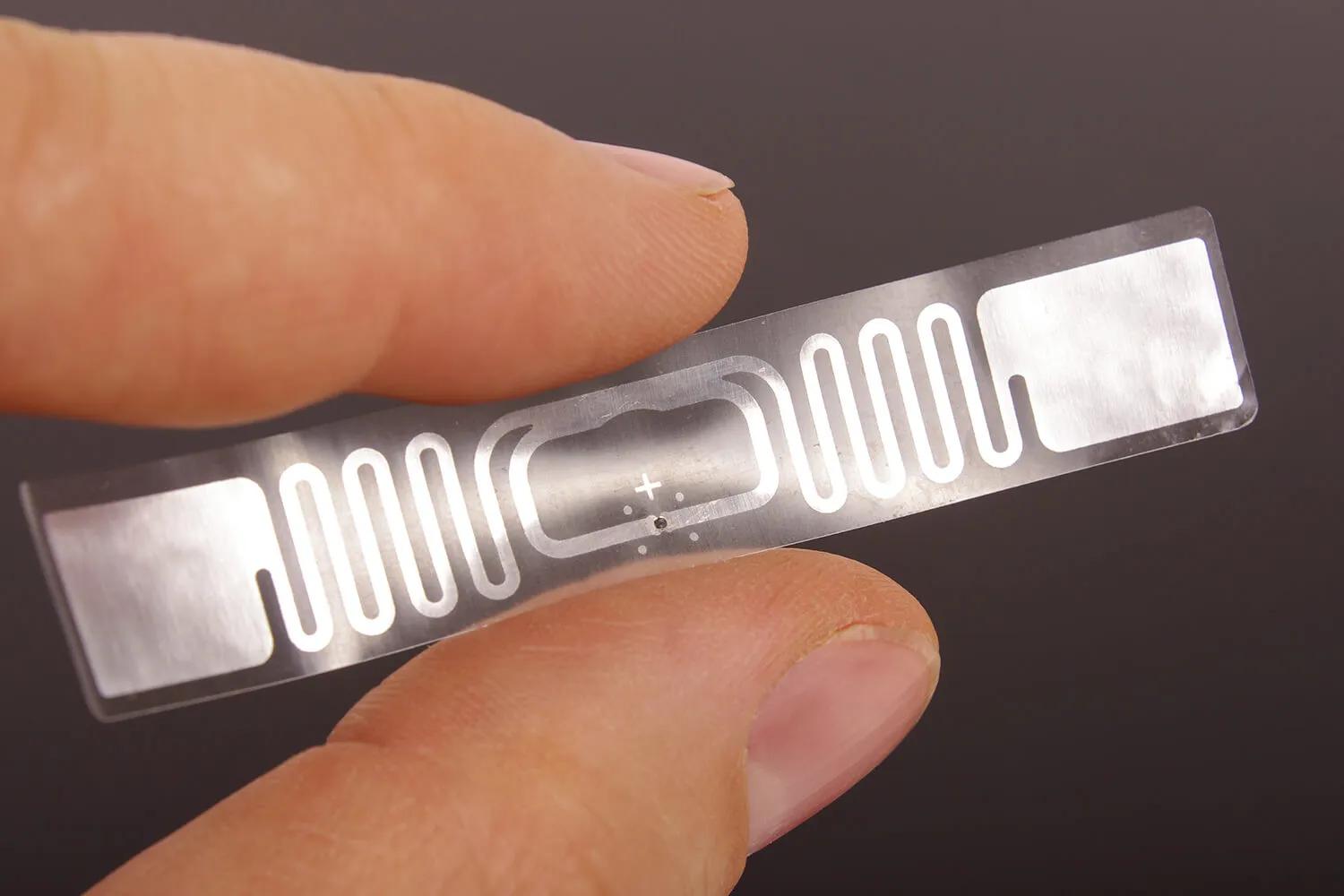
RFID Tag
Every year, manufacturers in the metals industry invest in RFID systems expecting better tracking and tighter inventory control. Many of those projects stall within weeks. Standard RFID tags do not perform on steel, aluminum, or other conductive surfaces. They misread, lose range, or go completely silent. For operations that handle coils, slabs, or work-in-process (WIP) metal parts, this creates a serious gap in visibility. Teams that need reliable RFID shipping and tag solutions often discover the problem after deployment, when phantom reads and missed scans disrupt production. Understanding why RFID tags for metal surfaces require a different approach is the first step toward solving the problem.
This guide explains the physics behind the failure, compares on-metal tag types for the metals industry, and covers the questions to ask before specifying a system for your steel service center or foundry.
How Metal Disrupts RFID Radio Signals
Standard passive UHF RFID tags work by harvesting energy from radio waves sent by a reader. The tag's antenna absorbs that energy, powers the microchip, and sends back a modulated signal. This process depends on a clean electromagnetic field between the reader and the tag.
Metal breaks that process in three ways.
Signal Reflection and Multipath Interference
Metal surfaces reflect radio frequency (RF) waves instead of allowing them to pass through. When a reader sends a signal toward a tag mounted on steel, the wave bounces off the surface. That reflected wave collides with the original signal and with waves reflecting off nearby metallic objects. Engineers call this multipath interference.
In some zones, reflected waves cancel the original signal and create dead spots. In other zones, constructive interference produces false or duplicate reads. According to research published in the IEEE Transactions on Antennas and Propagation, these reflections are the primary cause of read-range degradation in metal-dense environments.
Antenna Detuning
Every RFID tag antenna is tuned to operate at a specific frequency, typically in the 860 to 960 MHz UHF band. When a standard tag is placed directly against a metal surface, the conductive material alters the antenna's electrical properties. The antenna shifts off its designed frequency, a condition called detuning. A detuned tag cannot harvest enough energy from the reader to power its chip. It either responds weakly at a fraction of its rated range, or it does not respond at all.
This is not a gradual decline. A tag rated for a 10-meter read range in open air may drop below 1 meter when placed on steel. In many cases, it becomes completely unreadable.
Energy Absorption
Metal also absorbs a portion of the RF energy that reaches the tag. The chip receives less power, which further reduces read range. In environments filled with steel racks, machinery, and metallic inventory, reflection, detuning, and absorption compound. A reader that performs well in a cardboard-box warehouse will struggle in a steel coil yard.
On-Metal Tag Types and How They Compare
The RFID industry has developed several tag designs to overcome metal interference. Each type uses a different strategy, and the right choice depends on your specific application.
Spaced-Mount (Foam-Backed) Tags
Spaced-mount tags use a layer of foam or dielectric material between the antenna and the metal surface. This gap prevents the metal from detuning the antenna. Some designs also include a ferrite or magnetic absorbing layer that redirects reflected energy away from the antenna.
Best for: General asset tracking on metal shelves, racks, containers, and equipment. These tags are available as printable labels that work with standard RFID printers. They are the most affordable on-metal option.
Limitations: The foam layer adds thickness. Most spaced-mount tags are 1 to 3 mm thick, which may not suit applications where a flush surface is required. They are also less durable in extreme heat or chemical exposure.
Ceramic-Substrate Tags
Ceramic tags replace the standard plastic or paper substrate with a high-permittivity ceramic material. The ceramic acts as a dielectric resonator, concentrating electromagnetic energy within the tag and reducing sensitivity to the surrounding surface. Research from Nature Scientific Reports has shown that ceramic-based RFID tags can maintain stable performance across wide temperature ranges, making them suitable for foundries and heat-treatment operations.
Best for: High-temperature environments, harsh chemical exposure, and applications requiring a compact form factor. Ceramic tags are commonly used in automotive, aerospace, and metals manufacturing where parts move through ovens, baths, or outdoor storage.
Limitations: Higher per-unit cost than foam-backed tags. Ceramic is more brittle than plastic housings, though modern designs use protective coatings and IP68-rated enclosures to address this.
Embedded (In-Metal) Tags
Embedded tags are installed inside a drilled or machined cavity in the metal object. The tag sits flush with the surface, protected from physical damage. These tags use inductive coupling or specially designed antennas that work despite being surrounded by metal.
Best for: Tool tracking, surgical instrument management, and any application where surface-mounted tags would be torn off. In the metals industry, embedded tags are used on reusable fixtures, molds, and dies.
Limitations: Requires machining into the asset. Read range is typically shorter, usually 1 to 5 feet depending on configuration.
PCB (Printed Circuit Board) Tags
PCB anti-metal tags use an FR-4 fiberglass substrate with an etched antenna. They resist moisture, chemicals, and moderate heat. Many PCB tags attach with industrial adhesive, screws, or rivets.
Best for: WIP tracking in fabrication and processing, outdoor pipe and structural steel identification, and power equipment maintenance.
Limitations: Larger footprint than ceramic tags for equivalent read range. Not suitable for temperatures above 200°C without specialized variants.
Matching Tag Types to Metals-Industry Use Cases
The metals industry presents tracking challenges beyond simple surface interference.
Steel coil tracking requires tags that survive outdoor storage, crane handling, and temperature swings. Spaced-mount labels applied to the coil's eye or outer wrap are the most common approach for shipping identification. For in-process tracking through slitting and leveling, PCB or ceramic tags attached to the coil cradle or carrier provide better durability.
WIP tracking in steel service centers involves following material through cutting, bending, welding, and finishing. Tags must tolerate oil, metal shavings, and physical impact. PCB and ceramic tags mounted on racks, bins, or fixtures offer the best balance of read range and survival.
Foundry and forge applications expose tags to extreme heat. Ceramic-substrate tags rated for 250°C or higher are the standard choice here. Some foundries use embedded tags in reusable molds to track cycle counts and maintenance schedules.
Slab and billet identification in steel mills requires long read range (10 meters or more) in metal-crowded environments. Larger spaced-mount hard tags with optimized antennas can deliver these distances when paired with high-gain readers.
Questions to Ask Before Specifying On-Metal RFID
Choosing the wrong tag wastes money and delays your project. Work through these questions with your solutions provider before committing.
What is the surface material and finish? Bare steel, galvanized coatings, painted aluminum, and stainless steel all interact differently with RF signals. Your vendor needs to know the specific substrate.
What temperatures will the tag encounter? Standard adhesive-backed tags fail above 80°C. If your process includes heat treatment or welding proximity, specify the peak and sustained temperatures.
What read range do you need? A 6-meter read range in a lab does not guarantee 6 meters in a yard full of steel coils. Ask for field-tested performance data from similar environments.
How will the tag be attached? Adhesive, screws, rivets, epoxy, and embedding each have trade-offs. Match the method to your workflow.
Does the tag need to survive reuse cycles? Shipping tags may be single-use. Asset tags on tooling and containers must survive thousands of cycles. Confirm the tag's rated lifespan under your conditions.
Can you test before committing? Reputable providers offer sample tags and pilot programs. According to the Association for Automatic Identification and Mobility (AIM), pilot testing in the actual deployment environment is the best predictor of system success.
When on-metal RFID is specified correctly, steel service centers report faster inventory counts and fewer shipping errors. Foundries gain cycle-count data on molds that drives better maintenance scheduling.
For manufacturers and industrial RFID solutions in Ohio and across the U.S., working with a provider that specializes in metals-industry labeling makes the difference between a system that works on paper and one that works on the floor.
Conclusion
Standard RFID tags were not designed for metal. The physics of signal reflection, antenna detuning, and energy absorption make them unreliable on steel, aluminum, and other conductive surfaces. On-metal tag types, including spaced-mount, ceramic-substrate, embedded, and PCB designs, solve these problems through specialized materials and antenna engineering.
The metals industry has specific demands. Coil tracking, WIP management, foundry operations, and slab identification each require a different tag type, attachment method, and environmental rating. Asking the right questions before selecting a tag prevents wasted investment. Start with the environment, define the performance requirements, and test before you deploy at scale.
Frequently Asked Questions
Why do standard RFID tags stop working on metal surfaces?
Metal reflects RF waves back into the tag's antenna, causing interference that cancels the signal. The conductive surface also shifts the antenna off its tuned frequency, a condition called detuning. Together, these effects reduce read range to near zero or produce unreliable phantom reads.
What is the difference between a spaced-mount tag and a ceramic RFID tag?
A spaced-mount tag uses a foam or dielectric spacer to separate the antenna from the metal surface. A ceramic tag uses a high-permittivity ceramic substrate that acts as a dielectric resonator, concentrating RF energy within the tag. Ceramic tags handle higher temperatures and offer a more compact form factor, but they cost more per unit.
Can I use on-metal RFID tags to track steel coils through the supply chain?
Yes. Many steel producers and service centers use on-metal RFID labels or hard tags on coils for shipping identification and in-process tracking. The tag type depends on whether the coil faces outdoor weather, crane handling, or heat during processing. Pilot testing on your specific coil size and storage setup is recommended.
How far can on-metal RFID tags be read?
Read range varies by tag design, size, and environment. Compact on-metal labels typically achieve 1 to 5 meters. Larger hard tags optimized for metal can reach 10 to 15 meters with the right reader and antenna configuration. Dense metal inventory will reduce these distances compared to lab results.
What should I look for in an RFID solutions provider for the metals industry?
Look for a provider with direct experience in metals-industry applications. They should offer sample testing, field-validated performance data, and integration support for your existing warehouse management or ERP system. Providers who specialize in industrial labeling and RFID bring domain knowledge that general RFID vendors may lack.