

Auto Shop vs. Body Shop: What’s the Difference and Which One Do You Need?
When your car needs attention, knowing where to turn can be confusing. You might hear the terms “auto shop” and “body shop” used interchangeably, but they are two very different types of businesses with specialized technicians and equipment. Choosing the right one is crucial for getting the proper care for your vehicle, ensuring both its performance and appearance are in top shape.
This guide will walk you through the key differences between an auto shop and a body shop, the specific services each provides, and how to decide which one you need. We'll also touch on the importance of industry certifications and why choosing a reputable shop like First Class Collision Repair for your vehicle's bodywork is so important.
What is an Auto Shop?
An auto shop, also known as a repair shop or mechanic shop, is your go-to for everything that happens under the hood. These shops focus on the mechanical and electrical systems of your vehicle. Think of them as the doctors for your car's inner workings. When your car isn't running properly, making strange noises, or a warning light appears on your dashboard, an auto shop is the place to call.
Auto shops are staffed by mechanics or automotive technicians who are trained to diagnose and fix a wide range of mechanical issues. Their work is essential for the regular maintenance and overall health of your vehicle, keeping it running safely and efficiently. Regular visits to an auto shop for preventative maintenance can help you avoid major repairs down the road.
Services Offered at an Auto Shop
The services at an auto shop are extensive, covering everything needed to keep your car running smoothly and reliably. Here's a more detailed look at what they offer:
•Engine Diagnostics and Repair: This is one of the most critical services. When the dreaded “check engine” light comes on, it's a sign that your car's onboard computer has detected a problem. Mechanics use sophisticated diagnostic scanners to read the error codes and pinpoint the issue. Repairs can range from simple fixes like replacing a faulty sensor to complex jobs like a full engine rebuild.
•Comprehensive Brake Services: Your brakes are your car's most important safety feature. Auto shops provide complete brake care, which includes inspecting the entire system, replacing worn-out brake pads and rotors, and servicing the brake calipers. They also handle repairs to the hydraulic system, such as fixing brake line leaks and replacing the master cylinder, ensuring you have the stopping power you need.
•Routine Maintenance and Fluid Services: Regular maintenance is the key to a long and healthy vehicle life. This includes oil changes, which lubricate the engine and prevent wear, as well as replacing other vital fluids. Mechanics will recommend flushing and replacing transmission fluid, coolant (antifreeze), and brake fluid at manufacturer-recommended intervals to prevent system failures.
•Tire and Suspension Services: The connection between your car and the road is crucial. Auto shops handle all aspects of tire care, including tire rotations to ensure even wear, wheel balancing to prevent vibrations, and four-wheel alignments to ensure your car drives straight and your tires last longer. They also diagnose and repair suspension components like shocks, struts, and control arms to provide a smooth and controlled ride.
•Transmission and Drivetrain Repair: The transmission and drivetrain transfer power from the engine to the wheels. These are complex systems that require expert knowledge. Auto shops can diagnose issues like slipping gears, rough shifting, or strange noises. They can perform services ranging from fluid changes and minor adjustments to complete transmission rebuilds or replacements.
•Advanced Electrical System Repairs: Modern vehicles are packed with electronics, controlling everything from the engine and transmission to your infotainment system. Mechanics are trained to diagnose and repair these complex electrical systems. This includes troubleshooting issues with the battery, alternator, and starter, as well as fixing wiring problems and diagnosing faulty electronic control units (ECUs).
For a deeper understanding of the standards and certifications in the automotive repair industry, you can refer to the guidelines set by the Automotive Service Excellence (ASE), a leading certification body for automotive professionals. [1]
What is a Body Shop?
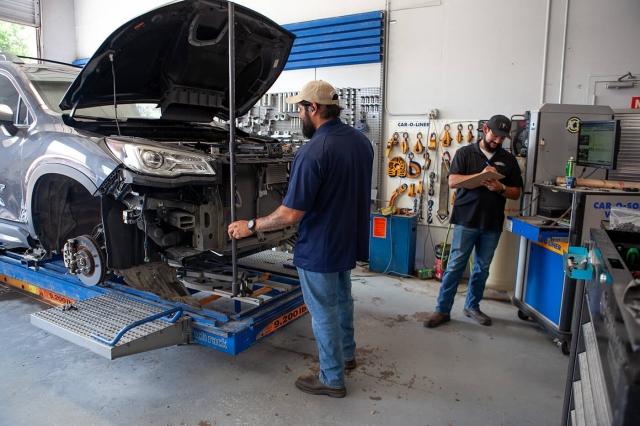
A body shop, also known as a collision center, specializes in repairing the exterior of a vehicle. If your car has been in an accident, hit by a stray shopping cart, or damaged in a hailstorm, a body shop is where you need to go. These shops are all about restoring the look and structural integrity of your car's body.
Body shops employ auto body technicians who are skilled in a different set of repairs than mechanics. They are experts in everything from fixing minor dents and scratches to major structural repairs. Their work is not just about making your car look good again; it's also about ensuring the vehicle is safe to drive after being damaged in a collision.
For top-quality collision repair services, you can rely on a trusted provider like First Class Collision Repair.
Services Offered at a Body Shop
The services at a body shop are focused on the exterior and frame of your vehicle. Here's what you can expect when you take your car to a collision center:
•Comprehensive Collision Repair: This is the primary service of any body shop. After an accident, technicians will carefully assess all the damage, both visible and hidden. They will then perform the necessary repairs to restore your vehicle to its pre-accident condition. This can include everything from minor cosmetic fixes to major structural work, all designed to ensure your car is safe and looks great.
•Expert Dent and Scratch Removal: Even minor dents and scratches can be frustrating. Body shops use specialized tools and techniques, such as paintless dent repair (PDR) for minor dents, to remove imperfections without the need for extensive bodywork. For deeper scratches, they will sand, fill, and repaint the affected area to make the damage disappear.
•Professional Painting and Color Matching: After a repair, the new or repaired part needs to be painted to match the rest of the car perfectly. Body shops use advanced color-matching technology, including computerized systems that analyze your car's paint code and create a custom blend. This ensures a seamless finish that looks like the damage never happened. The painting process also includes multiple coats of primer, paint, and clear coat for a durable, long-lasting result.
•Precision Frame Straightening: In a major collision, the frame or unibody structure of your car can be bent or twisted. This is a serious safety concern, as a damaged frame can affect the car's handling and its ability to protect you in another accident. Body shops have specialized frame-straightening machines that use hydraulic pressure to carefully pull the frame back into its original shape, restoring the structural integrity of the vehicle.
•Bumper, Fender, and Panel Repair: Bumpers and fenders are often the first parts to get damaged in an accident. Body shops can repair minor damage to these parts or replace them entirely if necessary. They also handle repairs to doors, hoods, and trunk lids, ensuring all panels fit properly and align correctly.
•Windshield and Auto Glass Replacement: A cracked or shattered windshield is not just unsightly; it's a serious safety hazard that can impair your vision and weaken the structural integrity of your vehicle. Body shops can replace windshields, side windows, and rear windows with high-quality glass that meets or exceeds OEM (Original Equipment Manufacturer) standards.
The collision repair industry has its own set of standards and best practices, with organizations like the Inter-Industry Conference on Auto Collision Repair (I-CAR) providing training and certification to ensure technicians are up-to-date on the latest repair techniques. [2]
Auto Shop vs. Body Shop: A Quick Comparison
To make it even clearer, here is a table that breaks down the main differences between an auto shop and a body shop:
|
Feature
|
Auto Shop (Mechanic)
|
Body Shop (Collision Repair)
|
|
Primary Focus
|
Mechanical and electrical systems
|
Exterior and structural components
|
|
Common Services
|
Engine repair, brake service, oil changes
|
Dent removal, painting, frame straightening
|
|
Technician Title
|
Mechanic or Automotive Technician
|
Auto Body Technician
|
|
When to Visit
|
Car isn't running right, maintenance
|
After an accident, cosmetic damage
|
|
Key Certifications
|
ASE (Automotive Service Excellence)
|
I-CAR (Inter-Industry Conference on Auto Collision Repair)
|
How to Choose the Right Shop
Deciding between an auto shop and a body shop is usually straightforward. If your car has a mechanical or electrical problem, you need an auto shop. If it has been in an accident or has cosmetic damage, you need a body shop. However, sometimes an accident can cause both body damage and mechanical problems. In this case, you might need to visit both types of shops.
Here are a few scenarios to help you decide:
•Your car won't start, but has no visible damage: This is a job for an auto shop. The problem is likely with the engine, battery, or another internal component.
•You were in a fender bender, and your bumper is cracked: This is a clear case for a body shop. They will repair or replace the bumper and make sure the paint matches perfectly.
•Your “check engine” light is on: This is a signal that your car's computer has detected a problem with the engine or emissions system. An auto shop has the diagnostic tools to figure out what's wrong.
•After an accident, your car is making a strange noise: This is a situation where you might need both. A body shop will fix the visible damage, but they may recommend you take it to an auto shop to have the mechanical systems checked out. Many collision centers, like First Class Collision Repair, have relationships with trusted mechanical shops and can help coordinate the repairs.
The Importance of Certifications
When choosing a shop, it's important to look for certifications. As mentioned earlier, ASE certification is the standard for mechanics, while I-CAR certification is the benchmark for collision repair technicians. These certifications show that the technicians have met industry standards and are committed to ongoing training. This is especially important as vehicle technology becomes more advanced.
As explained by Lincoln Tech, a provider of automotive training, the work environments and the tools used in auto body shops and mechanic shops are quite different, which is why the specialization and training are so distinct. [3]
Why Both Types of Shops are Important
Both auto shops and body shops play vital roles in keeping your vehicle in good condition. You can think of it like the healthcare system. Your primary care physician (the auto shop) handles your regular check-ups and treats illnesses, while a specialist surgeon (the body shop) is there for you when you have a major injury.
You wouldn't go to a surgeon for a common cold, and you wouldn't see your family doctor to set a broken bone. In the same way, it's important to take your car to the right specialist for the job. This ensures that your vehicle is repaired correctly and safely, which is the most important thing.
The Role of Auto Shops in Vehicle Longevity
Auto shops are essential for the long-term health of your vehicle. Regular maintenance, such as oil changes, brake inspections, and tire rotations, can prevent small problems from becoming major, expensive repairs. A well-maintained car runs more efficiently, gets better gas mileage, and is less likely to break down unexpectedly.
Mechanics also play a crucial role in diagnosing problems early. Modern cars have sophisticated onboard diagnostic systems that can detect issues before they become serious. By bringing your car to an auto shop for regular check-ups, you can catch these problems early and save yourself time and money in the long run.
The Role of Body Shops in Safety and Appearance
Body shops are equally important, especially after an accident. Even minor damage to your car's body can have serious consequences if not repaired properly. A bent frame, for example, can affect the alignment of your wheels, causing uneven tire wear and poor handling. It can also compromise the structural integrity of your vehicle, making it less safe in the event of another collision.
Beyond safety, body shops also help maintain the value of your vehicle. A car with dents, scratches, and faded paint will have a lower resale value than one that looks like new. By keeping your car's exterior in good condition, you're protecting your investment and ensuring you get the best price when it's time to sell or trade in.
What to Look for in a Quality Repair Facility
Whether you need an auto shop or a body shop, there are a few key things to look for to ensure you're getting high-quality service. Here are some tips:
•Certifications: As we've discussed, look for ASE-certified technicians at auto shops and I-CAR certified technicians at body shops. This is a sign of a well-trained and knowledgeable team.
•Reviews and Recommendations: Word-of-mouth is a powerful tool. Ask friends and family for recommendations, and check online reviews to see what other customers have to say.
•Written Estimates: A reputable shop will always provide a detailed, written estimate before starting any work. This should include the cost of parts and labor.
•Warranties: Ask about warranties on parts and labor. A good shop will stand behind its work.
•Customer Service: A clean, organized shop and friendly, helpful staff are good indicators of a well-run business. They should be willing to answer your questions and explain the repairs in a way you can understand.
Choosing a quality repair facility is an investment in your vehicle and your safety. Taking the time to find a shop you can trust will give you peace of mind and help keep your car on the road for years to come.
Conclusion: The Right Shop for the Right Job
Understanding the difference between an auto shop and a body shop is the first step in getting the right care for your vehicle. Auto shops are the experts for mechanical and electrical issues, while body shops specialize in restoring your car's appearance and structural integrity after a collision. Both are essential for keeping your vehicle in prime condition.
Remember to look for certified technicians and a commitment to quality customer service. For any of your collision repair needs, from a minor scratch to major accident damage, consider a trusted and professional facility like First Class Collision Repair to ensure your vehicle is in the best possible hands.
By choosing the right shop for the job, you can be confident that your car is receiving the expert care it deserves, keeping you safe and secure on the road.
References
[1] Automotive Service Excellence (ASE). https://www.ase.com [2] Inter-Industry Conference on Auto Collision Repair (I-CAR). https://www.i-car.com [3] Lincoln Tech. "Auto Body vs Auto Mechanic – What Is the Difference?". https://www.lincolntech.edu/news/automotive/automotive-technology/auto-body-vs-auto-mechanic-difference