

How to Descale a Tankless Water Heater in Dayton, OH: Step-by-Step Guide for Hard Water
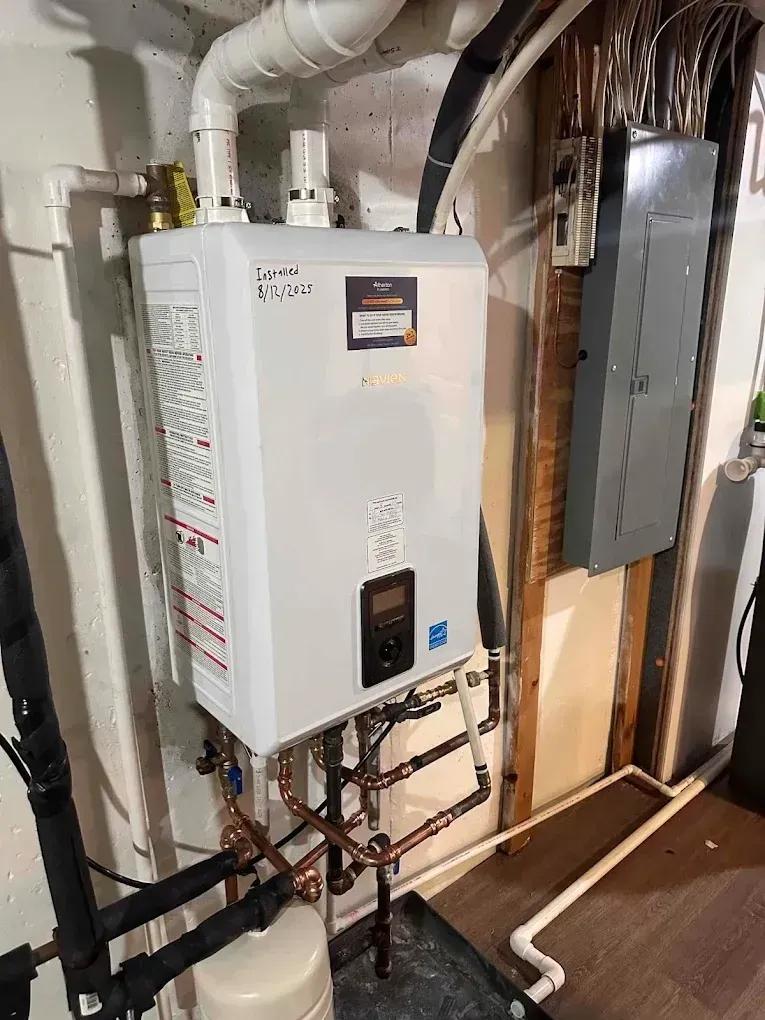
How to Descale a Tankless Water Heater
Mineral scale is the silent threat to every tankless water heater in the Miami Valley. Dayton's tap water averages roughly 9 grains per gallon of hardness, according to the City of Dayton Water Department. That puts it squarely in the "hard" category on the USGS scale. Calcium and magnesium ride into your home through the Great Miami Buried Valley Aquifer, and every time the heat exchanger fires, those minerals cling to metal surfaces. Without annual flushing, that buildup cuts heating efficiency, chokes water flow, and can shave years off the unit's lifespan. Descaling a tankless water heater in Dayton, OH is not optional if you want reliable hot water and lower energy bills. This guide covers the warning signs, the flush process, and the reasons professional maintenance pays for itself.
What Scale Does to a Tankless Water Heater
A tankless unit heats water on demand by running it through a narrow heat exchanger. High temperatures force dissolved minerals out of the water, and those minerals harden into a layer of calcium carbonate called limescale.
Scale acts like insulation on the wrong side of the wall. The burner has to work harder to push heat through the crust. According to the U.S. Department of Energy, even a thin coating reduces efficiency. Over months, that wasted energy shows up as higher utility bills.
Scale also narrows the exchanger channels. Flow rate drops, sensors detect the restriction, and the system shuts down with an error code. Left unchecked, heavy scaling can crack the exchanger, turning simple maintenance into a costly repair.
Warning Signs Your Tankless Heater Needs Descaling
Catching scale buildup early saves money. Watch for these symptoms.
Fluctuating Water Temperature
You step into the shower and the water swings between warm and cold every few seconds. Plumbers call this the "cold-water sandwich." Scale patches force the unit to cycle on and off as it struggles to maintain a set temperature. If the swings happen at a single fixture, the problem likely sits inside the heater, not the plumbing.
Reduced Hot Water Flow
Turn on a kitchen faucet all the way. If flow feels weaker than it did a few months ago, scale may be restricting the exchanger passages. Clean your faucet aerator first to rule that out. If aerators are clear and flow is still low, the exchanger needs attention.
Error Codes on the Display
Most brands display specific codes when they sense restricted flow or overheating. Rinnai units often show code 11 or LC. Navien models flash E003 or E016. Noritz displays error code 11 as well. Check your owner's manual for the exact meaning, but these codes frequently point back to mineral buildup inside the unit.
Unusual Noises
A clean exchanger runs quietly. When scale builds up, water boils against hot mineral deposits and creates popping or rumbling sounds. Some homeowners describe it as a light rattling. These noises signal that scale pockets are disrupting normal water flow across the heating surface.
Equipment You Need for a Vinegar Flush
A basic descaling kit contains everything for the job. You can buy a pre-packaged kit from brands like Kelaro or Hercules Haymaker, or assemble the parts yourself.
Gather these items: a submersible pump rated at 1/6 horsepower, two 6-foot washing machine hoses with 3/4-inch fittings, a 5-gallon bucket, and four gallons of plain white vinegar. Commercial descaling solutions based on citric acid also work well. Both vinegar and citric acid are food-safe and will not harm internal components.
If your heater does not have isolation valves on the hot and cold lines, a plumber will need to add them before you can flush the system yourself.
Step-by-Step Descaling Process
Follow these steps carefully. Always consult your manufacturer's installation manual before starting. Each brand has slightly different valve positions and reset procedures.
Step 1: Shut Off Power and Gas
Turn off the electrical breaker that feeds the unit. If you have a gas model, close the gas supply valve. Wait a few minutes for the unit to cool before touching any connections.
Step 2: Close the Isolation Valves
Locate the hot and cold isolation valves on the water lines leading to and from the heater. Turn both valves to the perpendicular (off) position. This isolates the unit from your home's plumbing so the descaling solution stays inside the heater loop.
Step 3: Connect the Hoses
Remove the service port caps on each isolation valve. Connect one hose from the cold-water service port to the outlet of the submersible pump. Connect the second hose from the hot-water service port and drop the free end into the bucket. Place the pump inside the bucket as well.
Step 4: Fill the Bucket and Start the Pump
Pour four gallons of white vinegar into the bucket, making sure the pump is fully submerged. Open both service port valves. Plug in the pump and let the vinegar circulate through the heat exchanger for 45 to 60 minutes. The solution will loop from the bucket, through the pump, into the cold side of the exchanger, out the hot side, and back into the bucket.
For heavy buildup, swap out the vinegar after 30 minutes and refill with a fresh batch. The Noritz descaling guide recommends changing the solution halfway through for best results.
Step 5: Flush With Clean Water
Turn off the pump and close the cold-water service port valve. Disconnect the hose from the cold service port. Open the cold-water isolation valve to send fresh water through the unit. Let it flow out the hot-water service port hose into the bucket for five to ten minutes, or until the water runs clear.
Step 6: Reassemble and Restore Service
Close both service port valves. Remove the hoses and replace the caps. Open both isolation valves to restore normal water flow. Turn the gas supply back on and restore power at the breaker. Run a hot-water faucet for a minute or two to bleed air from the lines and confirm the unit fires properly.
Step 7: Clean the Inlet Filter
While the service ports are open, unscrew the cold-water inlet filter screen. Rinse it under running water to clear trapped sediment. Reinstall snugly by hand. A clogged filter restricts flow just like scale does, so cleaning it during every flush makes sense.
How Often Should You Descale in the Dayton Area?
Most manufacturers recommend descaling once a year for homes with average water hardness. Dayton's 9 grains per gallon sits above the national average and above the 7-grain threshold flagged in many warranty documents. Homeowners in Kettering, Centerville, Beavercreek, and other Montgomery County communities pull from the same aquifer, so the same schedule applies.
If you notice warning signs before your annual service date, do not wait. Scale buildup accelerates once it starts, because the rougher surface catches new deposits faster.
Homes with a water softener may stretch the interval to 18 months. Homes without a softener, especially in areas like Huber Heights, Trotwood, or Englewood, should stick to a strict 12-month cycle.
Why Professional Maintenance Is Worth the Cost
A DIY vinegar flush handles the basics. It removes loose and moderate scale from the heat exchanger. But professional service goes further, and it protects your investment in two ways that a bucket-and-pump setup cannot.
Warranty Protection
Rinnai, Navien, Noritz, and other major brands require documented proof of annual maintenance to honor heat exchanger warranties. Those warranties cover 5 to 15 years of parts depending on the model. If the exchanger fails from scale damage and you cannot show service records, the manufacturer can deny the claim. A professional flush creates a paper trail that keeps your warranty intact.
Some manufacturers state that water hardness above 7 grains per gallon requires a water softener or more frequent descaling. Dayton's water exceeds that mark, so the stakes are higher here than in cities with softer water.
Full System Inspection
A licensed plumber does more than circulate vinegar. During a maintenance visit, the technician checks gas pressure, inspects the venting and exhaust, tests the temperature and pressure relief valve, reviews error code history, and examines the condensate trap on condensing models. These checks catch small problems before they turn into large repair bills. Atherton Plumbing's tankless water heater service team performs comprehensive inspections alongside every descaling flush.
Descaling and Energy Savings
A clean tankless unit can reduce energy use by up to 34 percent compared to a standard tank water heater, according to the U.S. Department of Energy. Scale erodes that advantage month by month. Even a small layer of mineral crust forces the burner to run longer cycles.
Homeowners who keep up with annual descaling see steady utility bills rather than the slow upward creep that comes with neglected equipment. Over a 15 to 20 year lifespan, those savings add up to hundreds of dollars.
Frequently Asked Questions
Can I use something other than vinegar?
Yes. Food-grade citric acid dissolved in water works well, and commercial products like Hercules Haymaker use a citric-acid formula safe for potable water systems. Avoid hydrochloric or muriatic acid, as these can damage copper heat exchangers and rubber seals.
How long does the whole process take?
A DIY flush takes about 60 to 90 minutes from start to finish. A professional tankless water heater service call typically wraps up in 30 to 45 minutes because technicians work with the equipment daily and carry commercial-grade pumps.
Will descaling fix my error code?
In many cases, yes. Error codes triggered by flow restriction or overheating often clear after a thorough flush. Power-cycle the unit after reassembly. If the code returns, contact a licensed plumber to inspect the unit for component damage beyond what scale removal can address.
Do I still need to descale if I have a water softener?
A softener reduces hardness and slows scale formation, but it does not eliminate the need for periodic flushing. Softeners can malfunction or run low on salt. Annual descaling remains the safest practice, even with treated water.
Keep Your Tankless Heater Running at Peak Efficiency
Descaling is the single most effective maintenance task for a tankless water heater, especially in a hard-water region like the Dayton metro. Watch for temperature swings, weak flow, and error codes. Flush with vinegar or citric acid at least once a year. Keep records of every service visit to protect your manufacturer warranty.
If you prefer to leave the job to a trained technician, or if your unit shows signs of heavy scale damage, schedule a tankless water heater maintenance appointment with a licensed local plumber who understands Montgomery County's water conditions.