

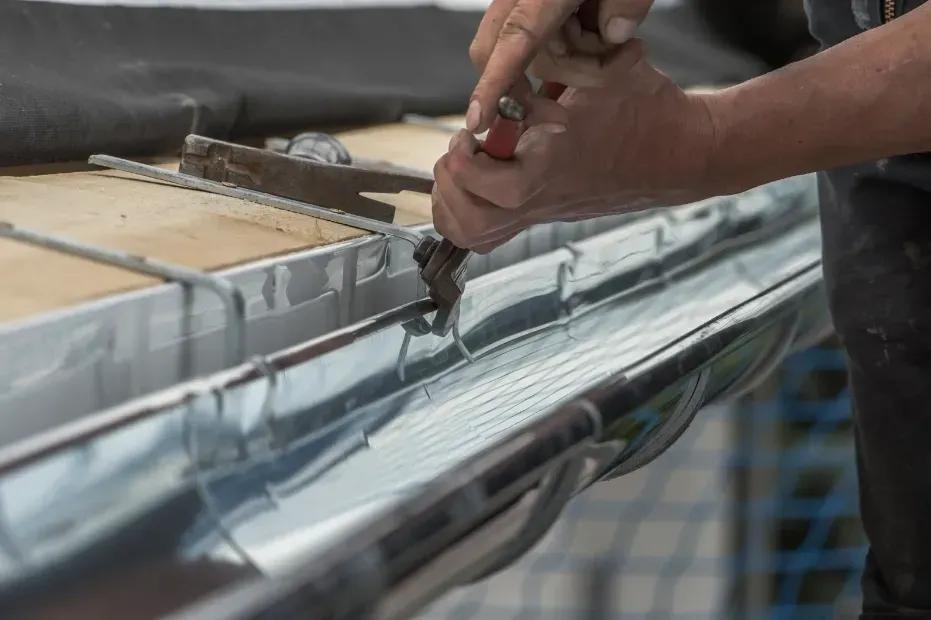
Gutter seams in Dallas, TX. Fast fixes for leaking joints before water reaches your fascia and foundation.
A drip from a gutter joint looks minor. Leave it alone for a season, though, and that small leak can rot fascia boards, stain siding, and erode soil along your foundation. Leaking gutter seams are the single most common failure point on sectional gutter systems. Every place where two gutter sections overlap creates a joint held together by sealant, and that sealant breaks down over time.
The good news is that many seam leaks respond well to a weekend repair. You can reseal most joints in under an hour with the right products and dry weather. The catch is knowing when a leak signals something worse, like corroded metal, failing brackets, or water that has already reached the fascia. This guide walks through a step-by-step seam sealant repair, explains the warning signs that point to bigger damage, and covers why seamless gutters eliminate the problem. If you need help right away, reach out through the gutter repair page for a same-day assessment.
Why Gutter Seams Fail
Sectional gutters ship in 10-foot lengths that connect end to end with slip connectors. Installers seal each joint with a bead of sealant or caulk. Over time, three things wear that seal down.
First, thermal expansion. Aluminum expands and contracts with temperature swings. Dallas summers push daytime highs above 100 degrees, then overnight temps drop 30 degrees or more. That cycle stretches each joint hundreds of times per year. Second, standing water. If the gutter pitch is off, water pools near a seam and softens the sealant. Third, debris accumulation. Leaves, shingle grit, and dirt settle at seam overlaps, trapping moisture and speeding decay.
According to the International Association of Certified Home Inspectors, gutters should be inspected at least twice a year. Seam sealants on sectional gutters typically last 5 to 10 years under normal wear, but poor pitch or heavy tree cover can cut that lifespan in half.
Step-by-Step Seam Sealant Repair
You can reseal a gutter joint in about 45 minutes. Pick a dry day with temperatures above 40 degrees Fahrenheit. Low humidity helps the sealant cure evenly.
Gather Your Tools and Materials
You will need a ladder with a standoff bracket, a wire brush or plastic scraper, rubbing alcohol or denatured alcohol, rags, a caulk gun, and gutter seam sealant. For sealant, choose a product rated for gutter use. Tripolymer and polyurethane sealants offer strong adhesion and remain flexible through temperature changes. Silicone works well on metal gutters but cannot be painted. Avoid general-purpose acrylic caulk because it hardens and cracks within a year or two in outdoor conditions.
Clean the Seam Area
Set your ladder securely and use the standoff bracket so the ladder rests against the wall, not the gutter. Scoop out any leaves, dirt, or shingle grit near the seam. Use the wire brush to scrub away old sealant, mineral buildup, and surface rust. Wipe the area with rubbing alcohol on a clean rag. The alcohol removes oils and film that block adhesion. Let the surface dry completely before moving on.
Apply the Sealant
Cut the tip of the sealant tube at a 45-degree angle. Insert the tube into the caulk gun and apply a steady, continuous bead along the inside of the seam. Work from one end of the overlap to the other without stopping. Press the sealant into the joint so it fills the gap rather than sitting on top of the surface. Use a damp finger or small plastic spoon to smooth the bead and eliminate air pockets.
Allow Proper Cure Time
This step is where many DIY repairs fail. Most gutter sealants feel dry to the touch in 30 minutes to 2 hours, but full cure takes 24 to 48 hours depending on the product and weather. The GE Sealants product guide recommends 24 to 48 hours for full cure on most formulas. Do not run water through the gutter or allow rain exposure before that window passes. A sealant that looks dry on the surface may still be soft underneath, and premature water contact weakens the bond permanently.
Test the Repair
After the cure period, run a garden hose into the gutter and watch the repaired seam for 5 to 10 minutes. Look at the joint from below and from the side. If water seeps through, the sealant may not have bonded. Strip it off, re-clean, and apply a fresh bead. Repeat failures usually point to a deeper issue with the joint or the metal itself.
Warning Signs That a Seam Leak Means Bigger Trouble
A successful sealant repair depends on the gutter metal being solid and the brackets holding everything in place. When those conditions break down, resealing the seam becomes a temporary patch at best.
Corrosion Spreading Beyond the Seam
Run your hand along the inside of the gutter near the joint. If the metal feels thin, pitted, or flaky, corrosion has moved past the seam into the gutter body. Sealant will not bond to corroded metal for long. The Bob Vila home improvement resource notes that once rust eats through the metal, the only lasting fix is section or full system replacement.
Bracket and Hanger Failure
Gutter hangers attach the trough to the fascia board, usually every 24 to 36 inches. If hangers near the seam have pulled loose, the gutter sags. Sagging shifts the joint alignment, reopens sealed seams, and creates low spots where water pools. When you push up on the gutter and it moves freely, the hangers need replacement before any sealant work will hold.
Fascia Water Stains or Soft Wood
Look at the fascia board directly behind the leaking seam. Dark stains, peeling paint, or soft spots in the wood mean water has been running behind the gutter for a while. Moisture trapped between the gutter and fascia accelerates rot. In some cases, the fascia itself needs replacement before new gutters can be mounted. Ignoring this stage leads to structural damage to the roof edge and soffit.
Multiple Seams Leaking at Once
If two or more seams leak at the same time, the gutter system is telling you something. The sealant across the entire run has likely reached end of life. Resealing every joint is possible, but the labor and materials add up fast, and the next round of failures is only a few years away. At that point, replacing the system makes more financial sense than cycling through repeated patch jobs. Our gutter repair team can inspect the full run and give you a clear recommendation.
Why Seamless Gutters Eliminate Seam Leaks Entirely
Seamless gutters solve the root cause of seam leaks by removing seams from the equation. A contractor uses a portable roll-forming machine to cut each gutter run from a single coil of aluminum, custom-sized to the exact length of your roofline. The only joints in a seamless system occur at inside corners, outside corners, and downspout outlets.
A typical sectional gutter system on a single-story home has 15 to 20 seam joints. A seamless system on the same home has 4 to 6. Fewer joints mean fewer leak points, less debris catching on overlaps, and smoother drainage.
Cost Comparison Over Time
Seamless aluminum gutters cost roughly $6 to $15 per linear foot installed, according to HomeGuide pricing data. Sectional gutters run $4 to $9 per foot. For a home with 150 to 200 linear feet of gutter, the upfront difference is a few hundred dollars.
The long-term math favors seamless systems. Sectional gutter seams need resealing every 3 to 5 years, which runs $100 to $400 each time. Over a 20-year span, repeated sealant jobs, section replacements, and water damage from leaks that slip through can cost more than the seamless system would have from day one. Seamless aluminum gutters last 20 to 30 years with basic cleaning. Sectional systems start showing seam problems within 5 to 10 years.
When an Upgrade Makes Sense
Consider seamless gutters if you are resealing seams for the second or third time, if your fascia already shows water damage, or if you plan to stay in the home for five years or more. The return on investment improves the longer you own the home because you skip the recurring repair cycle. If you are selling within a year or two, a single reseal may be the smarter short-term choice.
Choosing Between a DIY Fix and Professional Help
A single seam leak on gutters that are otherwise in good shape is a reasonable DIY project. The repair costs $10 to $25 in sealant and takes less than an hour. You need a sturdy ladder, a dry afternoon, and patience during the cure window.
Call a professional when you see any of these conditions: more than two seams leaking, visible rust near joints, sagging sections, water stains on the fascia, or hangers pulling from the house. A trained installer can evaluate whether a section replacement will solve the problem or whether a seamless upgrade is the better path.
Two-story homes add a safety factor. Working from a ladder at that height creates fall risk that outweighs the cost savings. The Consumer Product Safety Commission reports that ladder falls send over 100,000 people to emergency rooms each year. Hiring a crew with staging and safety gear is the safer route for second-floor gutter work.
Frequently Asked Questions
Can I use silicone caulk to seal a gutter seam?
Silicone adheres well to metal and stays flexible, but it cannot be painted. Use a tripolymer or polyurethane gutter sealant if you plan to paint the gutters later.
How long does a gutter seam repair last?
A properly cured sealant repair lasts 5 to 10 years under normal conditions. Poor surface prep or premature water exposure shortens that window.
Do seamless gutters ever leak?
They can leak at corners and downspout connections, but those joints are far fewer than in a sectional system. Properly installed seamless gutters rarely develop leaks along straight runs.
How do I know if my fascia is damaged?
Press the wood behind the gutter with a screwdriver. If the tip sinks in easily or the paint bubbles and flakes, the fascia has absorbed moisture and may need replacement before new gutters go up.
Is it cheaper to repair or replace leaking gutters?
One or two seam repairs cost far less than replacement. Once you are patching three or more seams every few years, the total expense approaches or exceeds the cost of a new seamless system that will last decades.