

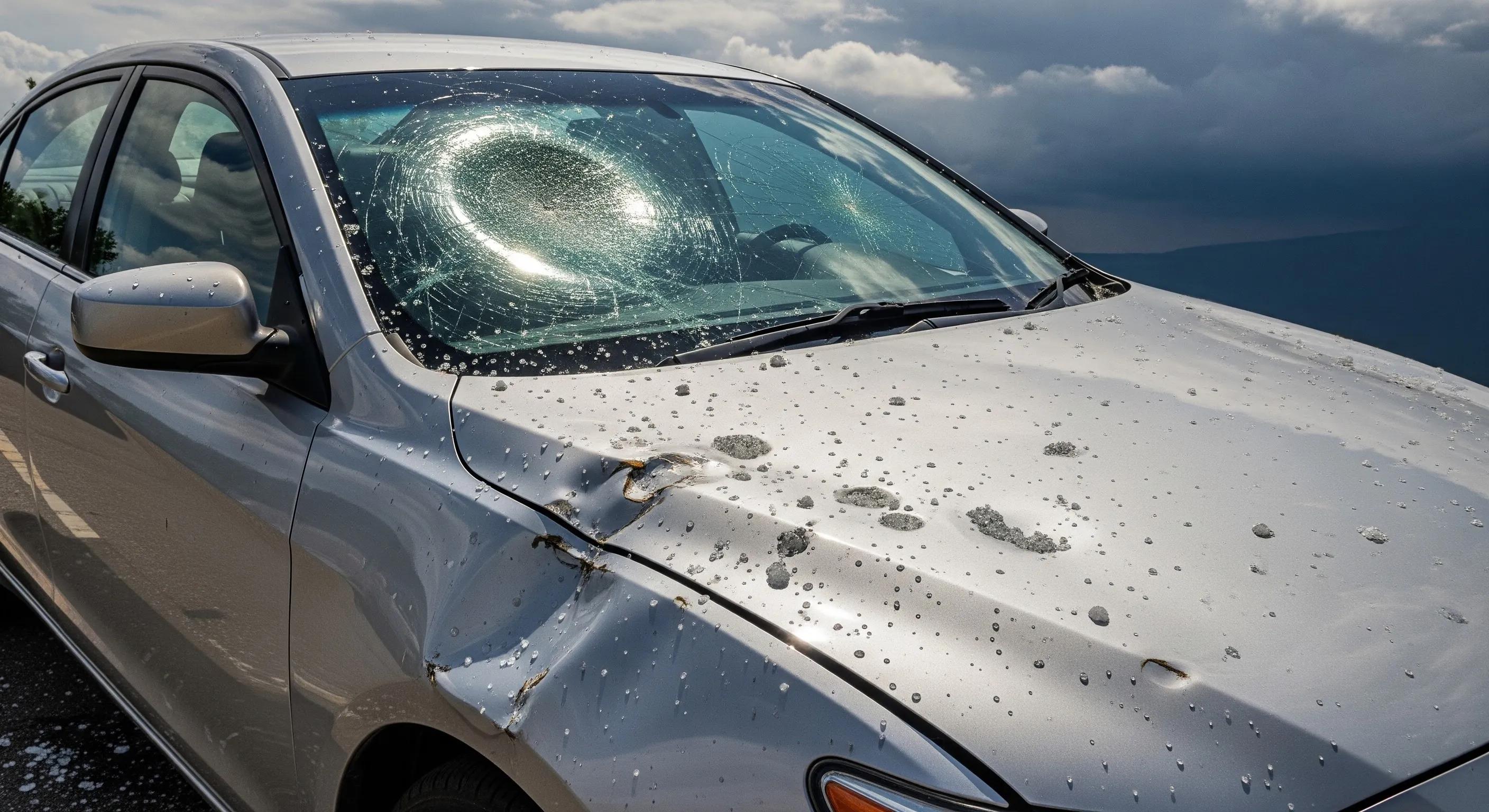
Hailstorms can strike without warning, leaving a trail of dents, dings, and surface damage across a vehicle's hood, roof, trunk, and panels. For car owners in Cincinnati, OH, and across the country, one of the first questions after a storm is whether repairing the damage is worth the time, effort, and expense. Is it worth fixing hail damage on a car in Cincinnati, OH? The short answer is yes in most cases, and understanding why starts with knowing how hail damage affects your vehicle over time. Whether you are dealing with a handful of minor dents or widespread damage across multiple panels, professional hail damage repair can restore both the appearance and the value of your vehicle.
This guide walks through everything you need to know about hail damage, its long-term effects, and when professional repair is the right choice.
How Hail Forms and Why It Damages Vehicles
Hail develops when strong updrafts inside thunderstorm clouds carry water droplets upward into freezing air. These droplets freeze into ice pellets, grow larger as additional moisture accumulates, and eventually fall to the ground when they become too heavy to remain suspended. Even hailstones the size of a marble can impact a vehicle's surface with enough force to create visible dents.
According to the National Oceanic and Atmospheric Administration (NOAA), hail causes billions of dollars in property and vehicle damage in the United States each year. The size and density of hailstones, combined with wind speed and angle of impact, determine how severe the resulting damage will be. A vehicle caught in a large hailstorm may sustain dozens or even hundreds of individual dents across nearly every exterior panel.
How Hail Damage Affects a Vehicle's Appearance
The most immediately visible effect of hail damage is cosmetic. After a significant hailstorm, a vehicle's body panels may be covered in shallow circular dents of varying sizes. While some dents are minor and barely noticeable, others can be deep enough to distort the natural lines and curves of the body panels.
On darker colored vehicles, this widespread denting creates an uneven texture that is plainly visible in certain lighting conditions. On lighter colored vehicles, the dents may be less obvious until the light hits the surface at a specific angle. In either case, the damage detracts from the vehicle's overall appearance and, depending on the severity, can make the car look neglected or poorly maintained.
In some cases, hail damage extends beyond simple denting. Larger hailstones can crack or chip paint, creating spots where bare metal is exposed. When bare metal is left unprotected, it becomes vulnerable to rust and corrosion, which can cause significantly more serious damage over time if left unaddressed.
The Impact of Hail Damage on Resale Value
One of the most important reasons to consider repairing hail damage is the effect it has on a vehicle's resale value. Whether you plan to sell the car privately or trade it in at a dealership, visible body damage almost always results in a lower offer.
Used car buyers and dealerships assess a vehicle's condition carefully. Unrepaired hail damage signals to potential buyers that the car has not been maintained, which can raise concerns about other aspects of its condition. Even buyers who understand that hail damage is cosmetic rather than mechanical may use it as leverage to negotiate a significantly lower price.
A vehicle with properly repaired hail damage, on the other hand, presents far better at the time of sale. When repairs are done professionally and documented, a seller can demonstrate that the vehicle has been well cared for. This protects the owner's investment and helps the vehicle retain as much of its market value as possible.
Providing documentation of professional repair helps buyers understand the nature and quality of the work performed and reduces concerns that may otherwise arise from a vehicle history report.
When Hail Damage Repair Is Recommended
Not all hail damage is the same, and the decision of whether to repair it depends on several factors.
Repair is strongly recommended when dents are deep enough to have cracked or chipped the paint. In these cases, exposed metal is at immediate risk of oxidation and rust. Even in a relatively dry climate, bare metal will eventually begin to corrode if it is not sealed and repainted. Addressing these areas quickly prevents a cosmetic issue from becoming a structural one.
Repair is also recommended when the number or distribution of dents is significant enough to visibly affect the vehicle's appearance. A vehicle with dozens of dents across the hood and roof is clearly going to suffer in resale value if left unrepaired, and the cost of professional repair is likely to be offset by the improved sale price.
For very minor damage involving only a few small, shallow dents in low-visibility areas, some owners choose to leave the damage unrepaired. This may be a reasonable decision if the vehicle is older, carries no comprehensive insurance coverage, and will not be sold in the near future. However, even in these cases, it is wise to have the damage assessed by a professional to ensure no paint cracking is present.
When comprehensive auto insurance is in place, the calculus often shifts further in favor of repair. Comprehensive coverage typically covers hail damage, meaning the vehicle owner may only need to pay their deductible while insurance covers the remainder of the repair cost.
Benefits of Professional Hail Damage Repair
When repair is the right choice, professional service produces results that are impossible to achieve through DIY methods. Two primary repair approaches are used by qualified technicians: paintless dent repair and traditional body repair.
Paintless Dent Repair
Paintless dent repair, commonly known as PDR, is the preferred method for hail damage in most cases. During PDR, technicians use specialized tools to carefully massage dents out from behind the panel, gradually restoring the metal to its original shape without disturbing the paint surface.
Because PDR preserves the factory paint finish, it offers several important advantages. It maintains the integrity of the original coating, which is important for both appearance and protection. It is also generally faster and more cost-effective than traditional repair methods. Perhaps most importantly for resale purposes, a vehicle repaired through PDR retains its original factory finish, which is something that sophisticated buyers and vehicle history tools can recognize.
According to Consumer Reports, preserving original factory paint is one of the most effective ways to protect a vehicle's long-term value. Repainted panels, even when done professionally, are sometimes detected during pre-purchase inspections and can reduce buyer confidence.
PDR is suitable for dents where the paint has not been cracked or chipped. For hail damage that has compromised the paint surface, traditional repair methods may be required.
Traditional Body Repair
When hailstones have caused paint cracking, deep gouges, or damage to trim and glass, traditional body repair techniques are employed. This process may involve filling and sanding damaged areas, priming, and repainting affected panels to match the factory color.
While traditional repair takes more time and involves repainting, it is the appropriate solution for damage that PDR cannot address. A skilled body shop can achieve results that are virtually undetectable to the eye.
Facilities that specialize in hail damage repair, such as 1st Class Collision in Cincinnati, OH, use advanced lighting systems and digital imaging technology to detect every dent and ensure thorough, accurate repairs. Working with an experienced shop that handles hail damage regularly ensures that all damage is identified and addressed, not just the most obvious areas.
Insurance Considerations for Hail Damage Repair
If your vehicle has comprehensive coverage, hail damage is generally a covered peril. The process typically involves filing a claim with your insurer, having the damage assessed, and working with an approved or preferred repair facility to complete the work.
It is important to document the damage thoroughly before any repairs begin. Taking clear photographs of each affected panel, noting the locations and sizes of dents, and keeping records of communications with your insurance company will help ensure a smooth claims process.
Many professional hail damage repair shops work directly with insurance companies and can assist with the documentation and claims process. This reduces the administrative burden on the vehicle owner and helps ensure that all damage is properly captured in the claim.
The Insurance Information Institute notes that comprehensive coverage is separate from collision coverage and is designed specifically for non-collision events such as weather damage, theft, and falling objects. Understanding your policy's deductible and coverage limits before filing a claim helps you make an informed decision about whether to proceed with an insurance claim or pay out of pocket.
Why Prompt Repair Matters
One consideration that is easy to overlook is the importance of timely repair. Surface dents that have not broken through the paint may seem harmless in the short term, but delaying repair can allow conditions to worsen. Temperature fluctuations cause metal to expand and contract, and existing paint stress from impact can develop into cracks over time even without further damage.
In addition, if you plan to file an insurance claim, most policies have time limits for reporting damage. Waiting too long after a hailstorm may result in a denied claim or complications in the assessment process.
Scheduling a professional inspection promptly after a hailstorm allows a technician to assess the full extent of the damage and recommend the most appropriate repair approach while the damage is still in its original state.
Conclusion
Hail damage is one of the most common weather-related vehicle issues in the United States, and it is also one of the most treatable. For most vehicle owners, repairing hail damage is a sound decision that protects long-term value, prevents secondary damage from rust and paint deterioration, and ensures the vehicle continues to present well.
The availability of advanced techniques like paintless dent repair has made professional hail damage repair faster and more accessible than ever. When combined with comprehensive insurance coverage, professional repair can restore a vehicle to its pre-storm condition with minimal out-of-pocket expense.
If your vehicle has sustained hail damage in Cincinnati, OH, consulting with a professional repair facility is the best first step. A thorough inspection will clarify the extent of the damage and provide a clear picture of the repair options available to you.
Frequently Asked Questions
Does hail damage always need to be repaired?
Not every case of hail damage requires immediate repair, but most situations benefit from it. Minor dents in areas where paint remains intact may not pose an immediate threat, but any damage that has cracked or chipped the paint should be addressed promptly to prevent rust and corrosion from developing. For vehicles that will be sold or traded in, repairing all visible hail damage is generally worthwhile to protect resale value.
Will hail damage cause rust?
Hail damage can cause rust if the impact has broken through the paint and exposed the bare metal beneath. Water and oxygen in contact with unprotected metal will initiate oxidation over time. Even in moderate climates, this process can begin within weeks or months. Having a professional inspect the damage and seal any exposed areas is the best way to prevent rust from developing after a hailstorm.
How long does hail damage repair take?
The time required to repair hail damage depends on the extent of the damage and the repair method used. Paintless dent repair on a moderately damaged vehicle can often be completed within one to three days. More severe damage requiring traditional body repair and repainting may take longer depending on the number of panels affected and the shop's workflow. A reputable repair facility will provide an accurate time estimate after assessing the damage.
Does hail damage affect a car's safety?
In most cases, hail damage is cosmetic and does not directly affect a vehicle's mechanical safety or performance. However, if hailstones have shattered windows, damaged headlights or taillights, or cracked the windshield, those repairs should be treated as priorities because they affect visibility and structural integrity. A professional inspection after a hailstorm will identify whether any safety-related repairs are needed.
Will repairing hail damage improve my car's resale value?
Yes, professionally repaired hail damage generally improves a vehicle's resale value compared to leaving the damage unrepaired. Buyers and dealerships assess visible body condition when determining a vehicle's worth, and unrepaired dents typically result in lower offers. When repairs are documented and performed by a reputable shop using methods like paintless dent repair that preserve the factory finish, the vehicle presents significantly better to potential buyers and may command a meaningfully higher sale price.