

Seamless vs. Sectional Gutters
Your gutters do more than catch rainwater. They protect your roof, your siding, and the foundation underneath your home. If you are shopping for new gutter installation in Cincinnati, OH, the first choice you face is seamless vs. sectional gutters. Most homeowners notice the price gap right away. Seamless systems cost more upfront. Sectional options look like a bargain on the shelf at the hardware store. But that sticker price does not tell the full story, especially in a city that receives 44 inches of rain per year and endures harsh freeze-thaw cycles every winter.
This guide breaks down the real differences between seamless gutters vs sectional gutters so you can make a confident decision. We cover how seams cause leaks, what each system costs over its full lifetime, and when sectional gutters still earn their place.
How Seams Turn into Leak Points
A sectional gutter system ships in pre-cut pieces, usually 10 feet long. Installers connect these pieces with snap-together joints or slip connectors sealed with caulk. A typical home needs 150 to 200 linear feet of guttering. That means 15 to 20 seam joints running along your roofline.
Each seam is a potential failure point. Sealant breaks down over time due to UV exposure, temperature swings, and the constant flow of water. Most joint sealant lasts one to five years before it cracks or separates. Once that seal fails, water drips behind the gutter and runs down your fascia boards.
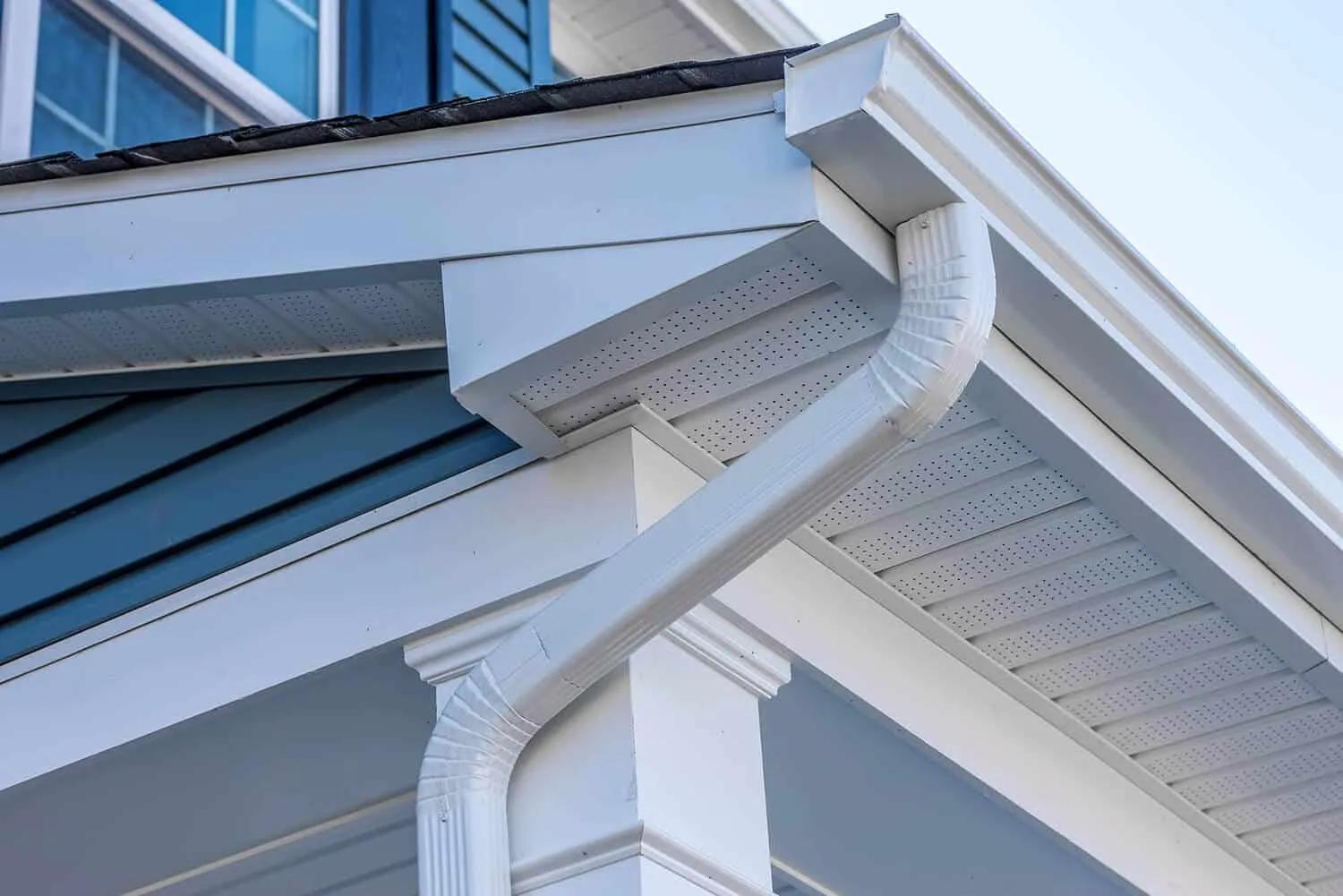
Seamless gutters work differently. A contractor brings a portable roll-forming machine to your property and fabricates each run from a single, continuous piece of aluminum. The only joints sit at corners and downspout connections. A typical seamless system has four to six joints instead of 15 to 20. Fewer joints mean far fewer opportunities for leaks.
In Cincinnati's climate, that difference matters more than you might expect.
Why Cincinnati's Climate Punishes Leaky Gutters
Cincinnati sits in a humid continental climate zone. The city averages about 44 inches of rainfall each year, well above the national average of 38 inches. Spring is the wettest season, with May alone delivering over four inches of rain on average. Heavy downpours during April and May push gutter systems to their limit.
Winter adds another layer of stress. Temperatures fluctuate between freezing and thawing throughout the season. Water inside a gutter joint freezes, expands, and forces the seam open. When daytime temperatures climb above freezing, the ice melts and water seeps through the widened gap. This freeze-thaw cycle repeats dozens of times each winter, widening cracks in sectional joints a little more each time.
Ice dams form when warm air from the attic melts roof snow. The meltwater flows to the cold gutter edge and refreezes. Ice buildup adds weight that pulls gutters away from the fascia. Sectional gutter seams are the first failure point under this stress because the connectors cannot handle the expansion and contraction as well as a continuous piece of metal.
Cincinnati-area homes with older rooflines and shaded north-facing eaves face the highest risk. A failing gutter seam during a spring storm can send hundreds of gallons of water straight down your foundation wall.
Ohio's Clay Soil and the Foundation Erosion Problem
Soil composition across Greater Cincinnati contains high amounts of silt and clay. The USDA Soil Survey classifies the Cincinnati soil series as fine-silty, and much of Hamilton County sits on expansive clay. This type of soil holds water, swells when wet, and shrinks when it dries.
When gutters leak, water pools near your foundation instead of flowing to downspout discharge points. That pooled water saturates the clay around your home. Wet clay soil can produce an upward force of up to 5,000 pounds per square foot. That pressure pushes against basement walls, causes bowing, and opens cracks. Over time, this can shift a foundation by several inches.
Foundation repair in the Cincinnati area averages $3,200 to $8,500, according to industry estimates. Compare that cost to the $300 to $700 price difference between a seamless and sectional gutter install. The math becomes clear. Preventing water intrusion at the gutter level is one of the most affordable ways to protect your foundation from expensive damage.
Proper drainage starts with a gutter system that holds its seal. Seamless gutters direct water into downspouts without leaking along the run.
True Lifetime Cost: Seamless vs. Sectional Gutters
Upfront price is only part of the equation. You need to look at what each system costs over its full lifespan, including maintenance, repairs, and replacement.
Sectional gutter costs:
Material and install: $4 to $9 per linear foot, or roughly $600 to $1,400 for a typical home
Sealant reapplication: Every three to five years at $200 to $400 per visit
Section replacement: Individual damaged sections cost $150 to $350 per repair
Average lifespan: 10 to 15 years with regular maintenance
Seamless gutter costs:
Material and install: $6 to $15 per linear foot, or roughly $1,500 to $2,500 for a typical home
Maintenance: Annual cleaning, typically at the low end of the $120 to $230 range due to fewer debris catch points
Average lifespan: 20 to 30 years with proper care
Over a 20-year window, a sectional system that needs sealant work every four years and one major repair racks up $3,000 to $5,000 in total spending. A seamless system that lasts 20-plus years with basic annual cleaning costs less over that same window, even though you paid more on day one.
The bottom line: seamless gutters carry a higher purchase price but a lower cost of ownership. For homeowners who plan to stay in their Cincinnati home for five or more years, the return on investment favors seamless.
When Sectional Gutters Still Make Sense
Seamless is the better long-term choice for most primary residences. But sectional gutters are not always the wrong call. There are a few scenarios where they fit.
Detached sheds, garages, or workshops: Structures where gutter performance is less critical do not need the leak protection of a seamless system. Sectional gutters handle the job at a fraction of the cost.
Short-term budget constraints: If you need functional gutters today but cannot invest in seamless right now, sectional gutters provide immediate protection. Plan to upgrade within five to seven years.
Temporary structures or homes you plan to sell soon: If you are preparing a property for sale within a year, sectional gutters at a lower price point can check the box for home inspections without overcapitalizing.
Partial repairs on existing sectional systems: If your sectional gutters are mostly sound and you only need to swap one damaged 10-foot section, it makes no sense to replace the entire run.
Outside these situations, seamless gutters offer better performance and a longer service life for Cincinnati homeowners.
Choosing the Right Material for Your Gutter System
Both seamless and sectional gutters come in several materials. Aluminum is the most popular choice in Cincinnati. It resists rust, handles temperature swings well, and costs less than copper or steel. Most seamless contractors in the area work with .027 or .032 gauge aluminum.
Vinyl sectional gutters cost the least, but they become brittle in cold Ohio winters. Repeated freezing causes cracking within a few years. Most gutter professionals in the region recommend aluminum over vinyl for homes that face ice buildup.
Copper and zinc offer premium durability with lifespans exceeding 50 years but carry a much higher price tag.
For most Cincinnati homeowners, seamless aluminum gutters in a five-inch or six-inch profile deliver the best balance of cost, durability, and performance.
Gutter Size and Downspout Capacity for Heavy Rainfall
Standard five-inch gutters handle most rainfall events in the Cincinnati area. However, homes with large roof surfaces, steep pitches, or valley-heavy rooflines benefit from six-inch gutters with oversized downspouts.
A six-inch gutter moves roughly 40% more water than a five-inch system. During intense spring storms common across Southwest Ohio, that extra capacity prevents overflow and foundation pooling.
Your contractor should calculate the effective drainage area of each roof section before recommending a size. This calculation factors in roof pitch, total square footage, and local peak rainfall intensity.
Conclusion
The choice between seamless and sectional gutters depends on how much protection you need and how long you plan to stay. Cincinnati's 44 inches of annual rainfall, freeze-thaw winters, and clay-heavy soil punish leaky gutter seams. Sectional systems with 15 to 20 joints face more wear, need more maintenance, and fail sooner.
Seamless gutters cost more on installation day. But they last twice as long, leak far less, and protect your foundation from costly water damage. For Cincinnati homeowners, seamless gutters are the stronger investment.
If you are ready to explore your options, a gutter company in Cincinnati, OH that specializes in seamless systems can inspect your roofline and provide an estimate based on your home's layout.
Frequently Asked Questions About Seamless and Sectional Gutters
How long do seamless gutters last compared to sectional gutters?
Seamless aluminum gutters typically last 20 to 30 years. Sectional gutters average 10 to 15 years with proper maintenance. The difference comes down to joint integrity. Fewer seams mean fewer failure points over time.
Can I install seamless gutters myself?
No. Seamless gutters require a portable roll-forming machine that costs $5,000 to $15,000 and demands trained operation. A professional fabricates each gutter run on-site to match your roofline. Sectional gutters are the only DIY-friendly option.
Are seamless gutters worth the extra cost in Ohio?
Yes, for most homeowners. Ohio's combination of heavy spring rainfall, freeze-thaw winters, and expansive clay soil creates conditions that stress gutter seams. The reduced leak risk and longer lifespan of seamless gutters offset the higher upfront price within five to seven years.
What causes gutters to pull away from the house in winter?
Ice dams form when attic heat melts roof snow. The meltwater refreezes at the cold gutter edge. Ice buildup adds weight that pulls gutters away from the fascia. Sectional joints weaken faster under this stress because the connectors handle expansion and contraction less effectively than continuous metal.
Do seamless gutters still need cleaning?
Yes. All gutters collect leaves, twigs, and shingle grit. However, seamless gutters clog less often because debris has fewer catch points without raised seam connectors. Most Cincinnati homeowners clean seamless gutters once or twice per year. Gutter guards can reduce cleaning frequency further.
What ZIP codes does Cincinnati gutter service typically cover?
Most professional gutter installers serve the Greater Cincinnati metro, including ZIP codes 45202, 45208, 45209, 45212, 45219, 45220, 45224, 45226, 45227, 45230, 45236, 45238, 45240, 45242, 45243, 45246, 45248, and 45249. Many also cover Northern Kentucky communities like Covington, Newport, and Florence.